
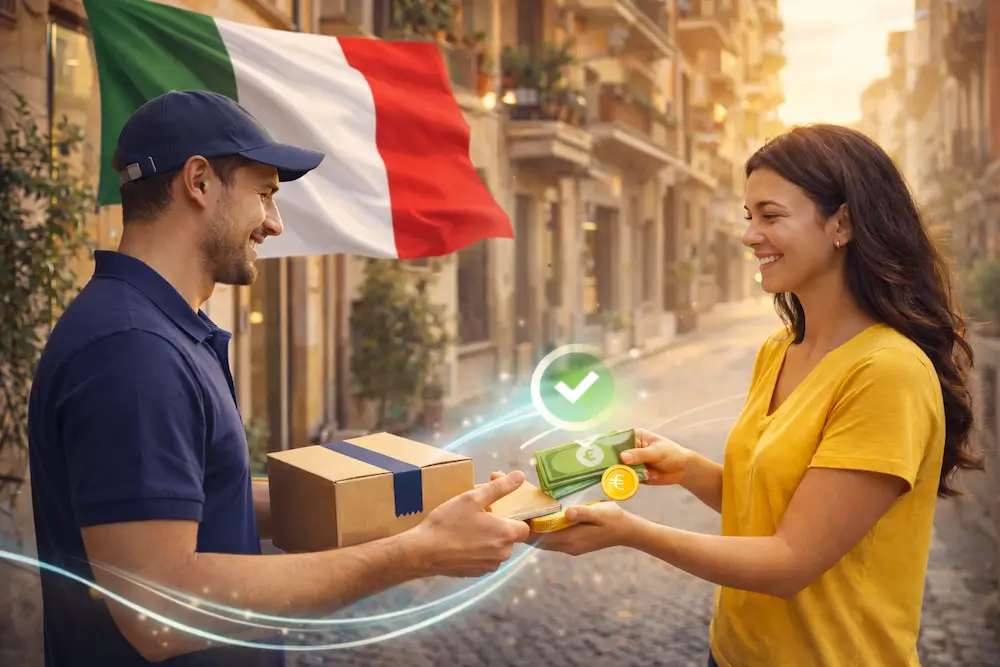
Italy is the most important cash-on-delivery market in Western Europe. With over 60 million inhabitants, a long-established culture of paying in cash, and one of the highest rates of COD adoption in e-commerce on the continent, Italy represents a significant opportunity for international sellers willing to build the right logistics infrastructure.
Known locally as contrassegno, cash on delivery has deep roots in Italian commerce. Italian consumers — particularly in the South, rural areas, and among older age groups — have historically preferred to pay at the moment of delivery rather than committing payment online. This preference has persisted even as digital payment adoption has increased, making Italy an exceptionally active COD market for direct-to-consumer sellers.
The Italian E-Commerce Market at a Glance
Italy ranks among the top five e-commerce markets in Europe by total revenue. However, the market has distinctive structural characteristics that differentiate it from the UK, Germany, or France:
- Regional disparity: The economic and behavioral divide between Northern and Southern Italy is significant. Northern regions (Lombardy, Veneto, Piedmont) have higher incomes, greater card payment adoption, and stronger logistics infrastructure. Southern regions (Campania, Sicily, Calabria, Puglia) have higher COD preference rates and, historically, higher failed delivery rates.
- High mobile traffic: Italian consumers are among the highest mobile internet users in Europe, and a large proportion of COD orders originate from mobile-optimized landing pages reached via social media advertising.
- Trust gap for unknown brands: Italian consumers are particularly reluctant to pay upfront to brands they do not recognize. COD removes this trust barrier entirely, which is why direct-response sellers targeting Italian consumers consistently find that offering COD significantly increases conversion rates.
COD Delivery Timelines in Italy
| Region | Typical Delivery Time |
|---|---|
| Milan, Rome, Turin, Bologna | 24–36 hours |
| Florence, Venice, Naples, Genoa | 24–48 hours |
| Secondary cities and provincial centers | 48–72 hours |
| Southern Italy (Calabria, Basilicata) | 48–96 hours |
| Sicily and Sardinia | 48–72 hours (with island surcharge) |
| Remote rural areas | Up to 5 working days |
Delivery to Southern Italy and the islands requires particular attention when managing COD operations. Failed delivery rates in these zones tend to be higher than the national average, partly due to address quality issues and partly due to lower confirmation reliability. Targeted call center strategies for Southern Italian orders — including more thorough address verification — can substantially improve outcomes.
The Contrassegno System: How COD Works in Italy
The Italian term contrassegno refers specifically to the cash-on-delivery collection mechanism used by carriers. When a parcel is shipped with contrassegno, the carrier is authorized to collect a specified cash amount from the recipient and is contractually obligated to remit that amount to the shipper (or the shipper’s fulfillment provider) within a defined period.
Key characteristics of the Italian contrassegno system:
- Collection limits: Italian carriers typically allow contrassegno for parcels valued up to €500–€1,500 per parcel, depending on the carrier agreement
- Remittance cycle: Cash collected by carriers is typically remitted to the fulfillment provider weekly or biweekly, which affects the seller’s cash transfer timeline
- Carrier documentation: All contrassegno shipments require specific carrier documentation linking the parcel to the collection amount
Working with a fulfillment provider that has established contrassegno agreements with multiple Italian carriers gives sellers broader geographic coverage and reduces dependency on a single carrier’s performance.
Regional Performance: North vs. South
One of the most important strategic decisions for COD sellers in Italy is how to approach the North/South divide:
Northern Italy:
– Higher confirmation rates (typically 70–80%)
– Lower failed delivery rates (10–18%)
– Faster returns of undelivered parcels
– Higher average order values sustainable
Southern Italy:
– Higher raw order volume from social media ads
– Lower confirmation rates (55–70%)
– Higher failed delivery rates (20–35%)
– Requires more aggressive confirmation call protocols
Many experienced COD operators start with Northern Italy to establish baseline metrics, then expand South with adjusted operational parameters — including stricter confirmation call criteria and, in some cases, limiting COD availability to consumers who successfully complete the confirmation call.
What Products Perform Best in Italian COD Markets
Italy has distinct consumer preferences that influence which product categories perform well in COD campaigns:
Health, beauty, and personal care: Italy has a strong wellness and personal care culture. Products in this category — slimming supplements, anti-aging devices, personal grooming tools, and health monitoring gadgets — consistently generate high order volumes via direct-response advertising.
Home improvement and kitchen: Italian consumers invest heavily in home quality. Kitchen organization products, cooking accessories, and small appliances with strong demonstration value perform well in video-based ad formats.
Fashion and accessories: Italy’s fashion consciousness creates demand for stylish products at accessible price points. COD removes the hesitation barrier for fashion purchases from unfamiliar brands.
Garden and outdoor products: Italy’s large proportion of homes with outdoor spaces creates year-round demand for garden tools, outdoor furniture accessories, and seasonal products.
Technology accessories: Mobile accessories, earphones, and personal tech gadgets at €20–€60 price points are consistent COD performers across all Italian regions.
Import Compliance in Italy
Italy applies standard EU customs and product compliance requirements. Key considerations for sellers importing from outside the EU:
- Italian VAT (IVA): 22% on most goods; 10% on certain categories
- Product labeling in Italian: Mandatory for all consumer goods; labels must include product name, composition, country of origin, and EU importer details
- CE marking: Required for electronics, toys, and other regulated categories
- RAEE (WEEE) compliance: Sellers of electronic products must register with the Italian WEEE collective scheme
- Consumer protection regulations: Distance selling rules require clear return rights disclosure
A fulfillment provider experienced in Italian imports handles customs declarations, duty calculations, and labeling compliance, significantly reducing the administrative burden on international sellers.
Managing Return Rates in Italy
Italy has among the highest COD return rates in Europe, particularly in southern regions, which makes return rate management a critical operational priority.
Strategies that reduce return rates in Italian COD operations:
- Pre-dispatch confirmation with address verification — Confirming the order and verifying the address by phone before dispatch is the single most effective way to reduce failed deliveries.
- WhatsApp confirmation as a supplement — Italian consumers respond positively to WhatsApp messages confirming delivery times, which reduces instances of customers being absent at delivery.
- SMS delivery notifications — Carriers that send SMS alerts to customers on the day of delivery see significantly lower failed attempt rates.
- Order review before dispatch — Filtering orders with suspicious address patterns or high-risk postal codes before confirmation calls.
Summary
Italy offers the largest COD opportunity in Western Europe, but it requires sophisticated logistics management, particularly for Southern regions. Sellers who invest in strong confirmation call operations, work with experienced COD fulfillment providers, and adapt their strategies to Italy’s North/South dynamics can build highly profitable direct-to-consumer businesses without the complexity of managing local legal entities or operations independently.